Friday, February 10th, 2012
How do over-the-counter products sold as promoting eyelash growth stack up against Latisse, which is approved by the FDA and available only by prescription? We addressed this over-the-counter vs. prescription product question recently in a blog about wrinkle remedies and Botox. (Coincidentally, Latisse is made by Allergen, the same company that introduced Botox.) Like wrinkles, the eyelashes are a facial feature for which a variety of products promise improvement, usually claiming they will produce longer, thicker eyelashes, some in as little as two to four weeks – faster results than even Latisse achieves.
Here’s what we tell patients at The Peer Group in Florham Park, New Jersey, who ask us about non-prescription eyelash growth products and Latisse: Over-the-counter products are regarded as cosmetics by the FDA, and as long as the products do not claim medical benefits, the FDA doesn’t monitor or check the products. And since creating “longer, thicker lashes” is not a medical benefit, there is no scientific evidence of whether various OTC products work. In contrast, Latisse is the first and only product the FDA has found effective in growing eyelashes, and it is prescribed for treatment of hypotrichosis, or shortage of hair, of the eyelashes. The Latisse clinical studies were conducted at 16 sites across the U.S. as well as the FDA’s Center for Drug Evaluation and Research, and included more than 275 participants, women and men aged 22 to 78. Throughout the 16-week treatment, each person was photographed and evaluated at four-week intervals (week 0 to week 16) for differences in overall lash prominence, consisting of length, thickness and fullness. At the end of the treatment period, Latisse demonstrated that it was effective in 78 percent of the participants – almost eight out of ten. A formulation identical to Latisse but without its active ingredient was found to be effective in 18 percent of participants in a control group.
We can tell you our patients from Chatham, Summit, Randolph and throughout the New York-New Jersey tri-state region have been very happy with the results of their Latisse treatments, and so have we. As always, consult with a qualified medical specialist before choosing and undergoing any cosmetic treatment.
Wednesday, August 24th, 2011
We recently wrote about an FDA-approved – in fact the only FDA-approved – method of restoring fuller, longer eyelashes. It’s the topical solution Latisse, a skin care product made by Allergen, the same company that developed Botox and Juvederm. In clinical trials Latisse was found to be effective in increasing the length, thickness, and darkness of eyelashes in women who’s lashes had lost their fullness through natural aging.
Many of our clients here at The Peer Group have asked for more details about the clinical trial results, so here are some important facts about them. First, most of the women who took part in the study – 91 percent –were 35 or older. So that means the results are applicable for women 35 and older. And the skin care results were clear and dramatic: Longer lashes started to grow as early as week 4. During the trials, patients grew more lashes and there was significant improvement in eyelash prominence, including length, thickness, and darkness. These new lashes were fuller and darker at week 8, and achieved maximum growth at week 16. After 16 weeks of treatment, the fullness of patients’ eyelashes more than doubled. Those are results no plastic surgery can achieve.
Among the best things about Latisse, besides its efficacy, is that it’s a simple topical solution you apply once a day at home. There’s no downtime and minimal potential side effects. We recommend consulting a board certified plastic surgeon before about any cosmetic treatment or cosmetic plastic surgery procedure you have in mind. Here at The Peer Group, we’re been getting questions from a lot of our patients in Warren and Somerset counties, from Mendham, Summit and Livingston and throughout northern New Jersey about Latisse. Our answer: If you’re like many women with thinning eyelashes, Latisse may be the solution you need.
Friday, July 22nd, 2011
Facial wrinkles and discolored skin are perhaps the most obvious sign of aging. As we’ve noted in recent blogs, several non-invasive cosmetic procedures, including chemical peels, microdermabrasion, intense pulsed light therapy, and laser skin resurfacing, can alleviate these symptoms of your accumulating time on earth. But your wrinkling or skin blemishes may not require even a non-invasive procedure, let alone plastic surgery such as a facelift. Prescription skin care products can also reduce the symptoms of aging skin. The variety of these formulations makes it a lot easier for people who want a treatment they can perform at home to find a prescription skin care solution right their individual needs. One line of products we carry and recommend at the Skin Care Center here at The Peer Group in northern New Jersey is SkinCeuticals.
SkinCeuticals skin care for aging skin products utilize pharmaceutical grade ingredients and are specially designed and formulated to provide three-fold treatment: first, for the correction of past skin damage second, for maintenance of current skin health; and third, for protection against damage in the future. SkinCeuticals offers both corrective and preventative anti-aging skin care treatments that can restore skin’s smooth, radiant, healthy appearance. The SkinCeuticals line includes creams and cleansers for the removal of oils and dead skin, as well as sunscreens with antioxidants that can help prevent the development of skin cancer.
Before selecting any cosmetic treatment option, we recommend consultation with a board certified plastic surgeon. He or she has the knowledge of all the procedures and prescription solutions available, and can help determine the skin care treatment most suited to your goals. If you live in Parsippany, Short Hills, the Caldwells or anywhere in northern New Jersey, we invite you to call or email us at The Peer Group to schedule a consultation with one of our plastic surgeons. We can advise you on all your prescription skin care product options
Friday, June 3rd, 2011
Smile lines and crows feet are two signs of aging skin. Permanent skin creases from a lifetime of smiles, along with squinting in bright light and other contractures of muscles around the mouth and eyes, combine with skin damage from the sun, loss of skin elasticity, and depletion of collagen to cause these facial wrinkles. Several skin care procedures can significantly reduce crow’s feet and smile lines, without plastic surgery.
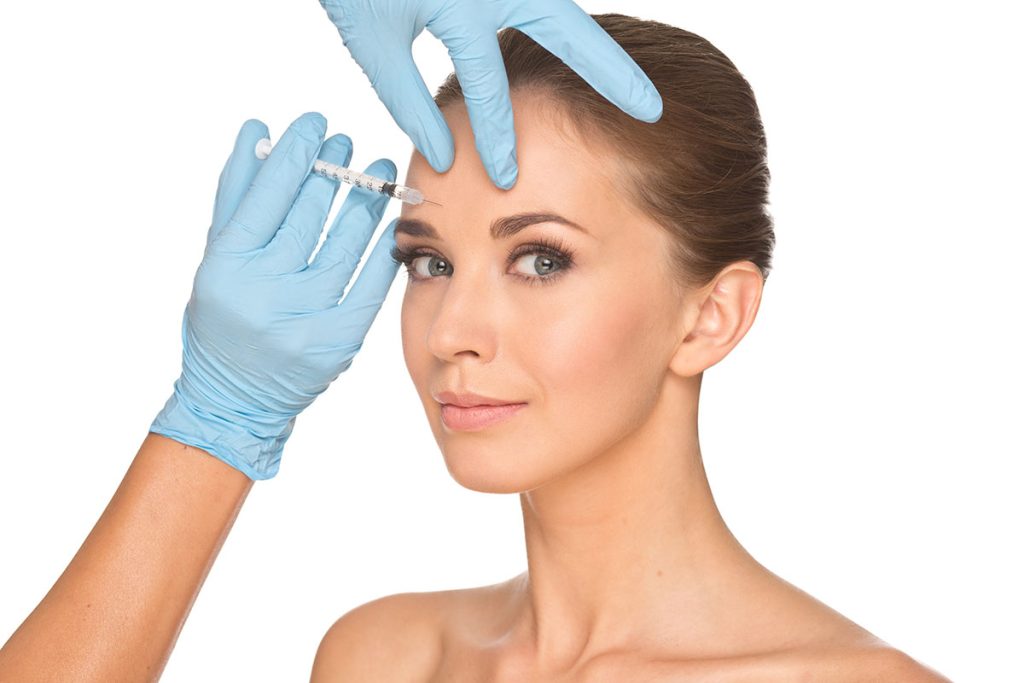
BOTOX Cosmetic injections are one popular and effective method of reducing smile lines and crows feet. Injected into the underlying muscles, Botox paralyzes the muscles that cause the wrinkles, loosening the contracture and smoothing the creases.
Skin resurfacing can also reduce wrinkles and permanent creases around the mouth and eyes. Injections of collagen, to supplement the body’s depleted stores of collagen, which contributes to the wrinkles, can also be effective, as can injections of hyaluronic fillers such as Restylane. Fat transfer, which works in similar fashion, is another commonly used procedure for reducing smile lines, crow’s feet, and other facial wrinkles. In this cosmetic procedure, small amounts of fat are harvested from your own body and injected into areas on the face that have lost volume due to aging.
At The Peer Group in northern New Jersey our board certified plastic surgeons perform a variety of plastic surgery procedures and oversee skin care treatments for reducing crow’s feet, smile lines and other lines and wrinkles on the face. But you can take the most important steps to deal with these cosmetic problems on your own. The most important keys to avoiding deep wrinkles in the first place: Minimize direct exposure to the sun. Use sunscreen whenever outdoors, not just at the beach, and wear a hat any time the sun is out. Try to avoid making facial expressions that lead to deep wrinkles. Don’t stop smiling, but wear sunglasses in sunlight to avoid squinting. Follow these rules and you can minimize the lines and wrinkles around your eyes and lips.
Monday, May 9th, 2011
Injectable fillers can be used for a variety of cosmetic procedures, like reducing wrinkles and plumping sunken features. In fact, these procedures are sometimes called liquid facelifts. Some fillers are referred to by brand name, some by their generic name, and sometimes their uses overlap, so it can be a challenge keeping track of all your options for cosmetic procedures. Here’s a quick guide to some of the best known injectables and their uses.
Botox is the brand name of a product made from a neurotoxin, Clostridium botulinum. It smoothes skin by paralyzing tiny muscles whose contractions cause wrinkles. It is most commonly applied to reduce wrinkles in the forehead and around the eyes. Dysport is now available as a Botox alternative and has very similar properties and benefits.
Radiesse is a brand name for Calcium Hydoxylapatite (CaHA). It can reduce wrinkles and skin folds around the mouth and nose and also fill some scars. Particles of CaHA are suspended in a water solution, which is injected into the treatment area.
Restylane and Juvederm are the brand names of two popular Hyaluronic-acid based fillers. Hyaluronic acid is a naturally occurring carbohydrate found in human tissue. Juvederm and Restylane injections are used to reduce nasolabial folds, frown lines, and crows feet. (Do you want to refer to their use to fill both aging lips and to give women fuller lips?)
Sculptra is the brand name for Synthetic Poly-L-lactic acid. A biocompatible acid culled from natural sources, it is used to plump skin by stimulating a patient’s own collagen rather than filling winkles. Skin folds, indented chin, hollow cheeks and sunken eyes are areas where it is commonly used.
Fat transfer is another injectable filler procedure. Fat is taken from one part of the body and used for filler, typically in the same locations that collagen fillers are injected. A variety of harvesting methods are used.
The filler deemed best for you by a cosmetic plastic surgeon is selected based on a variety of criteria, including time, costs, the individual’s condition, and the judgment and practices of the cosmetic surgeon. With the exception of fat transfer, which requires no FDA approval, all of these fillers are FDA approved for cosmetic use, and our clients in northern New Jersey have been very pleased with the results of Juvederm, Restylane, Botox and other injectable fillers. We’ll blog more about these products and treatments in the future.